
Is your nail salon safe? Check it against these 5 points
By Rebecca Hitchon | 26 August 2026 | Business & Education
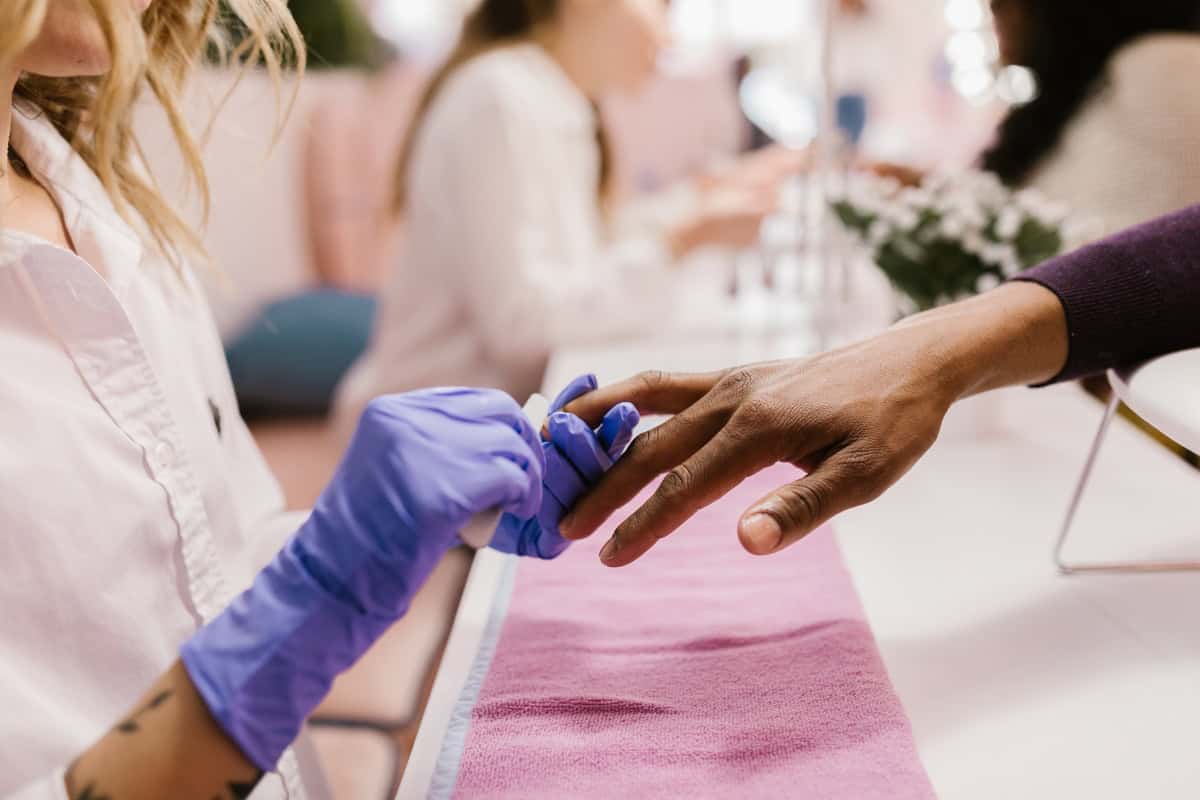
A popular ITV morning show has received backlash from the nail community for suggesting that reputability and safety are based on the size of a nail salon.
Whether a business is run by one nail tech or has a large team, safety is determined by five key areas, which we detail below…
1. Accredited qualifications & insurance
The British Association of Beauty Therapy (BABTAC) launched the T.I.M.E consumer safety campaign in 2023, with the T and I of the acronym standing for Training and Insurance. As Lesley Blair MBE, CEO of BABTAC, notes: “A reputable beauty professional should be able to provide evidence of their qualifications and explain where they trained, as well as hold appropriate insurance for every treatment they offer.
“If a practitioner is avoidant, becomes defensive or cannot produce evidence when asked, this should immediately raise concerns. Qualifications demonstrate competence, while insurance provides reassurance that the practitioner is operating professionally and responsibly. Consumers should never feel embarrassed about asking to see both.”
A nail tech’s qualifications should be accredited/recognised by an a reputable industry body, such as ABT, BABTAC or HABIA.
2. A thorough consultation
A consultation is a crucial step before any nail service. If it is skipped, it could not only negatively impact the results of a treatment, but also your safety. As Tanya Jeskins, Scratch Stars Natural Nail Specialist of the Year finalist 2024, 2025 and 2026, states: “A consultation is a professional conversation that takes place before every appointment, to ensure a nail tech has all the necessary information to carry out a service that’s in the client’s best interests.
“It should cover common issues and contraindications (conditions that may prevent or restrict a service), personal preferences, client health/medication updates and any limitations. A consultation also upholds the nail tech’s insurance terms and conditions, and provides the opportunity to create an ongoing plan to reach the client’s nail goals,” she continues.

3. Appropriate health & safety measures
Award-winning nail pro, educator & finalist for the Scratch Stars Services to the Nail Industry award 2026, Mario Zatkovsky, comments: “Good safety and hygiene are the foundations of professional nail services. Proper hygiene measures prevent cross-contamination, reduce the risk of infection, protect clients and nail technicians, and raise standards across the industry.”

Are you enjoying this content?
Join our community to receive more like this
You should be seated at a disinfected and ventilated workstation, with a clean towel and couch roll. Tools should have been cleaned, disinfected and where appropriate, sterilised, while single-use tools like files and buffers should be new for each client. Although wearing gloves is not mandatory for nail techs, this is highly advised. Do not be afraid to ask about a salon’s hygiene protocols.
You should also receive high-quality aftercare pointers. Lesley Blair MBE states: “A professional practitioner should provide clear aftercare advice, and explain any health and safety considerations following a treatment. This is an important part of professional monitoring and helps clients achieve the best possible results safely.”
4. Legal compliance
A safe salon will follow all legal requirements, from having appropriate insurance to obtaining any relevant treatment licences, depending on local rules. Legal compliance also applies to products. As Caroline Rainsford, director of science at the Cosmetic, Toiletry and Perfumery Association (CTPA), explains: “Common signs of an illegal product in the UK include labels that are not written in English, are missing legally required warnings such as ‘for professional use only’, and don’t include the name of a ‘Responsible Person’, who is legally responsible for the product’s safety.”
We share what makes a high-quality, professional nail product here.
5. Great customer care
If there is an issue before, during or after a nail service, a reputable salon will handle any concerns appropriately and with care. As Scratch Stars Ultimate Gel Tech and One Stroke Artist, Catriona Leith, shares: “Nail techs should handle concerns with kindness and professionalism. No one expects perfection, but they do expect to be listened to.”
Global beauty business expert, Kim Ford, adds: “A nail professional should listen to a client’s complaint without interrupting, acknowledge the customer’s feelings, show empathy towards their experience, apologise for any inconvenience caused and assure them that their feedback is valued. They should then clearly communicate the steps they will take to rectify the situation, ensuring transparency throughout, and follow up with the client after resolving the complaint to ensure their satisfaction.”
Related articles:
Gel polish: No, it’s not bad for you – as long as these rules are followed