

A nail technician’s guide to protective gloves
By Guest Writer | 31 January 2026 | Expert Advice, Feature, Health & Wellbeing
Robert Giblett, nail industry safety expert & founder of professional nail brand, IKON.IQ, shares gloves insight for nail pros…
Why do you need the right gloves?
As a nail technician, your hands are your most important tools. Every day, you work with chemicals that can cause allergies and skin problems. The right gloves can protect you, but the wrong ones might not help at all.
Many nail techs develop allergies to chemicals like acrylates and methacrylates (the ingredients that make gel polish and acrylic hard). Once you become allergic, even tiny amounts can cause painful rashes, swelling and burning skin. Unfortunately, for some nail technicians that develop allergies, this can end their careers.
The good news? One of the most important ways to prevent allergies is by choosing the right gloves and using them correctly.
Understanding glove safety standards
What is EN ISO 374:2016?
EN ISO 374:2016 is an international safety standard that tests how well gloves protect against chemicals or microorganisms. Within this standard, it tells you exactly how long each glove can protect you from different chemicals. Compared to the earlier EN 374:2003 standard, 18 chemicals are tested now instead of only 12.
Important symbols to look for
When shopping for gloves, look for these symbols on the packaging:
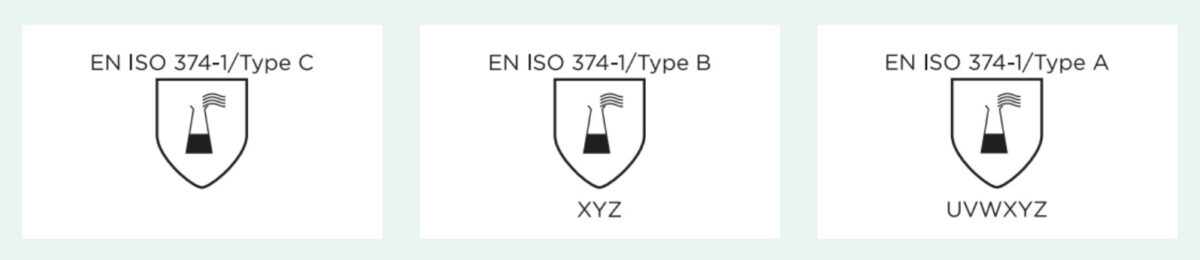
Within these symbols, the first information to find is how long the gloves will protect you from chemicals. There are three types:
- Type A: Protective glove with permeation resistance of at least 30 minutes.
- Type B: Protective glove with permeation resistance of at least 30 minutes.
- Type C: Protective glove with permeation resistance of at least 10 minutes.
Underneath each symbol, you may see a mixture of characters from A to T. Each character corresponds to a particular chemical that was tested on the glove:
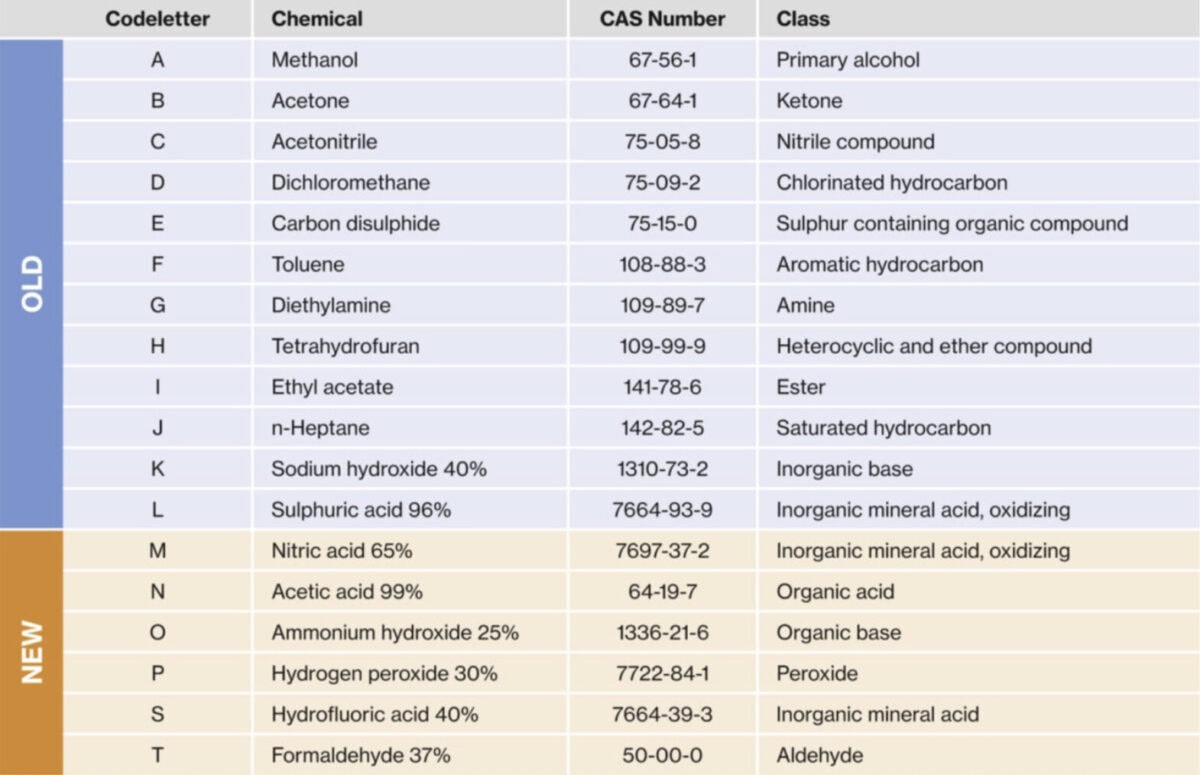
If you look again at the symbols above, you can see that the number of chemicals used to test the gloves are zero, three and six. Now look at the list of chemicals and you’ll notice that the gloves are not tested with any of the acrylate or methacrylate chemicals commonly used in acrylic, gel or gel polish.
This means that the ISO-374 standard is not helpful for nail businesses, because it doesn’t test all the chemicals pros interact with, and offers no accurate way of knowing how long a glove will be protective for.
More research
While ISO-374 doesn’t help us to understand which gloves offer the greatest protection against allergies, peer-reviewed research articles provide more useful information. What these show is that regular disposable gloves don’t protect very well against nail chemicals:
- Acrylates (in gel polish): Break through thin nitrile gloves in just three to five minutes.
- Acetone: Breaks down nitrile gloves in under one minute.
- Hand movement: Makes protection 30% worse than lab tests show.
These times are approximations and depend on the glove thickness and manufacturer. However, the research highlights that disposable gloves are better than nothing, but do not offer perfect protection.
Different types of gloves: pros and cons
| Glove type | Material | Protection time | Best for | Pros | Cons | Cost |
| Nitrile | Synthetic rubber | 5-30 minutes with gel chemicals | General nail work | No latex allergies, good grip and affordable | Breaks down with acetone and tears easily | Low |
| Latex | Natural rubber | 5-10 minutes with acrylates | Quick acetone tasks | Flexible and better with acetone than nitrile | Can cause allergies and is poor with oils | Low |
| Neoprene | Thick synthetic rubber | 20+ minutes with acrylates | Gel polish and acrylic work | Best disposable protection and durable | Expensive, thick and offers less finger feeling | Medium |
| Vinyl/PVC | Plastic | Poor chemical protection | Basic cleaning only | Very cheap and no allergies | Breaks easily, has a loose fit and poor protection | Very low |
| Specialty chemical | Butyl rubber/laminates | Hours of protection | Heavy chemical work | Best protection and reusable | Very expensive, bulky and offers less sensitivity | High ($20-50+) |
Summary: In a nail business, neoprene gloves offer the best balance of protection and usability, while nitrile works well for general tasks if changed frequently.
Practical tips for nail technicians
1. Layer your protection:
- Thicker gloves offer more protection.
- Change them after each client or when the gloves are contaminated with product.
- If you have allergies, change gloves every 30 minutes. Consider double gloving, wearing cotton gloves and/or skin barrier cream under.
- Have thicker gloves ready for mixing chemicals or cleanup.
2. Watch for warning signs:
- Skin tingling or burning while wearing gloves.
- Redness after removing gloves.
- Gloves that feel sticky or start dissolving.
If any of these symptoms occur, change gloves immediately!
3. Smart glove practices:
- Never reuse disposable gloves.
- Change gloves between clients.
- Immediately change gloves if they tear or get holes.
- Wash hands before and after wearing gloves.
- Keep different types of gloves for different tasks.
4. Read the fine print:
- Check Safety Data Sheets (SDS) for your products.
- Look for glove recommendations from manufacturers.
- When in doubt, use thicker gloves.
Remember: your health comes first
Allergies to nail chemicals can end your career. Once you develop an allergy, it usually gets worse over time and never goes away. The small cost of better gloves is nothing compared to the cost of selling your equipment and stock, medical treatment or having to change careers.
Here are my key takeaways:
- No disposable glove is perfect against nail chemicals.
- Change gloves often: every 30 minutes, after each client and when gloves are contaminated.
- When in doubt, use thicker, more protective gloves.

Read the latest issue