




How menopause affects nails & ways to manage symptoms
By Scratch Staff | 25 October 2025 | Expert Advice, Feature, Health & Wellbeing
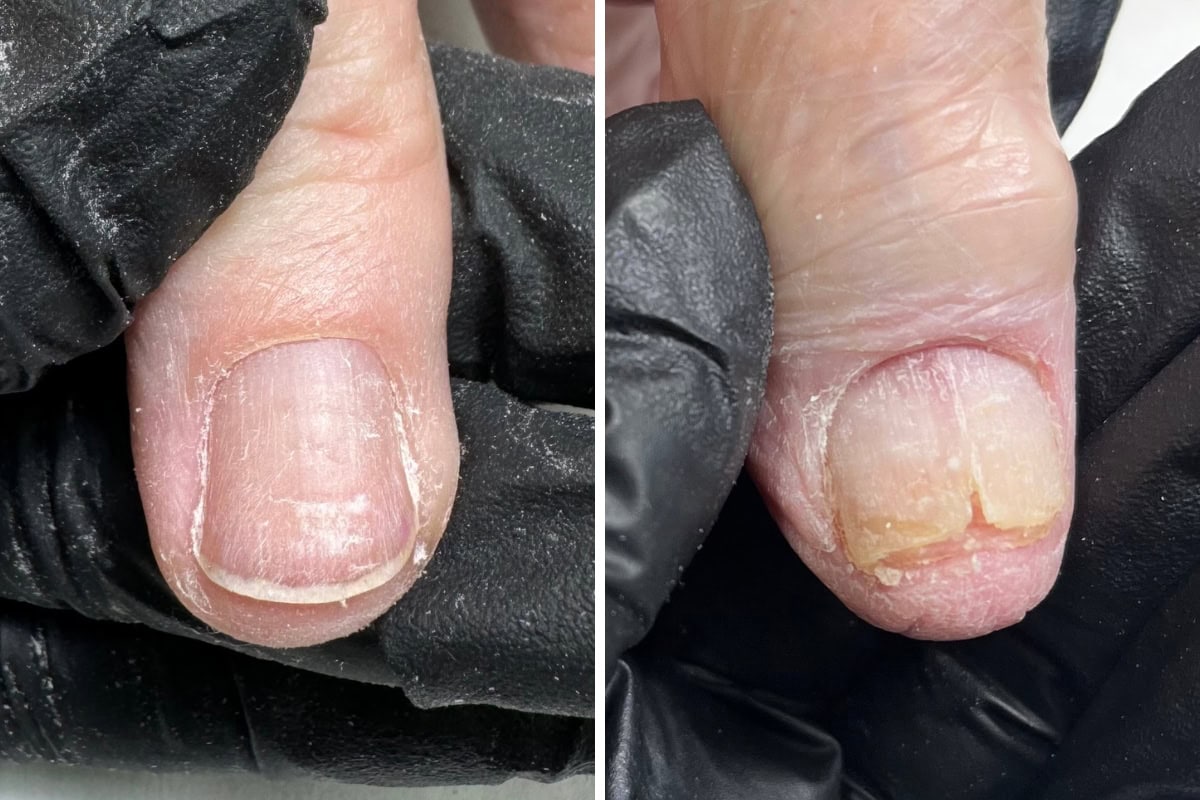
Lead imagery courtesy of Lucy Price-Marshall, showing the impacts of menopause on nails.
Menopause typically occurs between the ages of 44 and 55, and involves a change in hormone levels – which affects various aspects of a woman’s health. But how does it affect natural nails?
Science notes

“During menopause, the ovaries gradually stop releasing eggs and producing oestrogen, progesterone and testosterone hormones,” explains Claire Hattrick, aka The Executive Menopause Coach.
Claire notes the effect of menopause on nail health: “Declining oestrogen levels reduce collagen production and impair moisture retention in skin, hair and nails, which can make nails grow more slowly, become brittle and split or peel more easily.
“Reduced circulation and nutrient delivery to the nail matrix, along with potential deficiencies in biotin, zinc or iron, can further impact nail strength and appearance.”

“Changes to hormones can affect the newly forming nail at the matrix, but there will only be a noticeable impact if these are long-lasting changes,” adds Lucy Price-Marshall, Scratch Stars Ultimate Natural Nail Specialist & OPI freelance educator. “This is why the menstrual cycle does not impact nails, but pregnancy and menopause can.”
How to help
“I have seen clients’ nails become drier and more brittle postmenopause, which I treat via regular maintenance appointments that include hydrating elements,” Lucy continues. “This brittleness can make nails more prone to breaks, so I recommend opting for a softer shape to prevent nails catching.
“Changes to the texture of nails are also very common as oestrogen levels drop, and clients can develop onychorrexis (vertical ridges), which may require an overlay for strength and protection. Additionally, I’ve seen nails and cuticles become oily during perimenopause and menopause, which can cause nail lifting.”

“As menopause affects women in many different ways, the body doesn’t prioritise nails, skin and hair, and diverts nutrients to other places that it thinks need them,” comments Claire Blincoe, Gelish master educator. “Applying a moisturising hand lotion and hydrating cuticle oil is beneficial, and I use Morgan Taylor’s Daily Elixir Keratin Treatment to tend to extremely dehydrated, weak nails.”

“I find that builder gel and acrygel enhancements provide strength to the weak nails of menopausal clients,” adds nail artist & educator, Erin Searle, who experienced early menopause.
“I also advise regular maintenance appointments and to keep nails short, as well as aiding hydration and relaxation with moisturising massages at the end of treatments.”

Mandie Foster of @polishedpro_mf, Canada, highlights the benefits of specific nailcare. “It’s not about doing ‘more’, but about offering the right kind of care every few weeks. Clients need to maintain regular appointments and commit to aftercare.”
Mandie emphasises the importance of hydration, stating: “Cuticle oil is essential.” She recommends products containing jojoba oil and vitamin E to help nourish nails.

Aurelija O’Neill, owner of Starry Moon Beauty nail and piercing studio, Dublin, acknowledges how crucial menopause awareness is and says: “It is important that women voice their concerns, no matter how big or small they may seem.
“Sometimes, a small thing that a client points out to a nail tech might lead to a conversation that could nudge them towards a GP and menopause assessment.”
Read Scratch’s article on menopause matters from the October 2025 issue here.

Read the latest issue


