


4 E-file mistakes that can damage nails & how to avoid them
By Rebecca Hitchon | 04 October 2026 | Business & Education
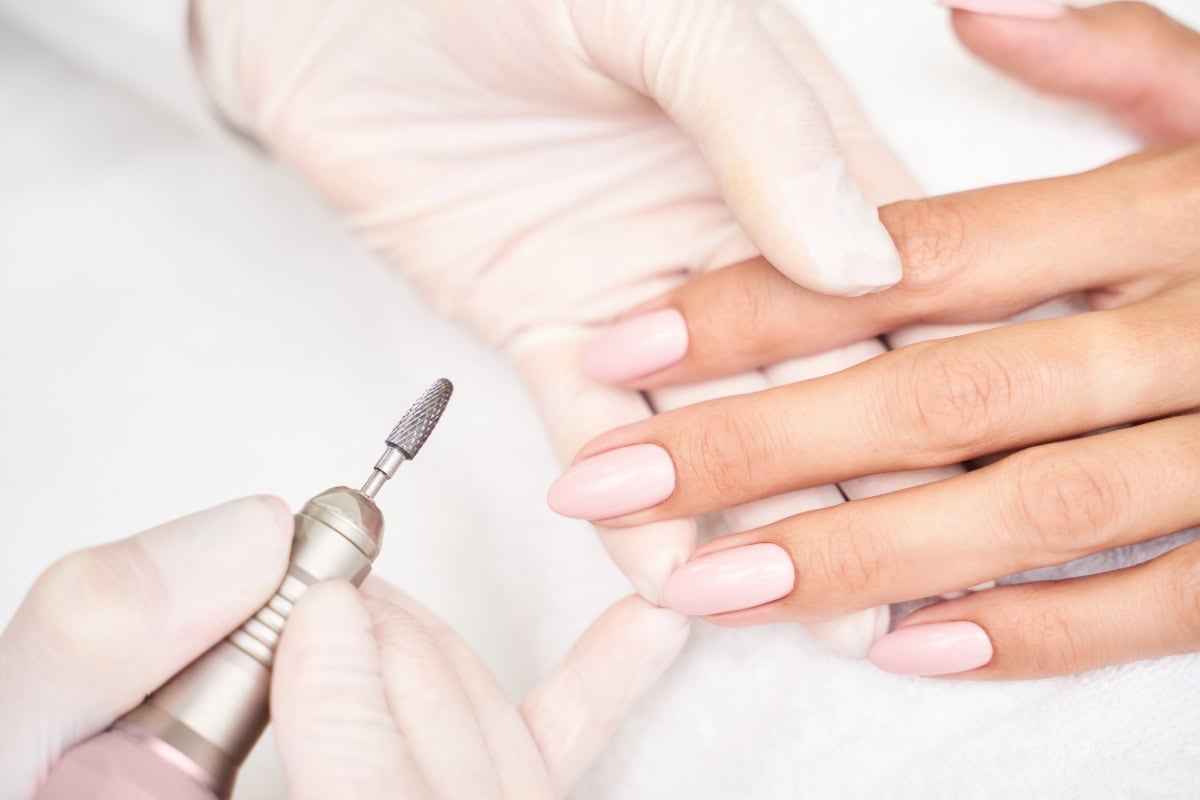
Nail experts share the common E-filing issues they’ve noticed, why they can be harmful and advice to ensure safe E-file services…
1. Choosing the wrong E-file bit

“If you choose the incorrect E-file bit for the task you carrying out, the treatment time will take a lot longer and the bit will wear out more quickly,” shares Michelle Brookes, Scratch Stars Ultimate Educator. “You also wouldn’t want to use a bit that is too coarse on the natural nail or around the cuticle area, as this could cause a lot of damage.”

London-based nail educator, Rebeca Dounetas, gives an example. “One of the biggest E-file mistakes I’ve noticed is nail techs choosing the wrong shape of carbide bit,” she explains. “Many don’t realise how the shape of the E-file bit affects how safely and efficiently they can debulk product. A bit that isn’t well-shaped can make this process much slower and reduce confidence.”
Explore our guide to choosing the correct E-file bit here.
2. Working at an incorrect speed and angle

“One of the largest misconceptions is that using an E-file at a low speed is automatically safer,” notes Melanie Lewendon, Scratch Stars Educator of the Year 2024 & Online Educator of the Year 2025. “The RPM (revolutions per minute) should be selected based on the bit being used and task being carried out. If the speed is too low for the task, many nail technicians compensate by applying more pressure, which can lead to inefficient filing, increased friction therefore heat build-up, and unnecessary damage.
“Every E-file bit has been produced with a particular purpose and working surface in mind, so look at its shape and consider which part has been designed to perform the task,” she continues. “Using an E-file bit at the incorrect angle can cause it to catch, dig in or apply pressure where it shouldn’t.”
3. Purchasing a low-quality E-file and bits
“When I first teach E-filing to students, they can become eager to purchase equipment straight away, without having the necessary funds,” reveals Michelle Brookes. “I have seen students buy cheap E-files with inadequate RPM and high vibration. Without a strong RPM, students lose confidence, and high vibration can be uncomfortable for clients. My advice is to save up for high-quality equipment recommended by professionals.”

Are you enjoying this content?
Join our community to receive more like this
“Low-quality E-file bits are a major issue,” adds Rebeca Dounetas. “Substandard carbide bits can create too much heat, and make product removal slower and more challenging. Poor-quality diamond bits can be too abrasive and cause significant damage.”
“E-file bits should be regularly inspected and replaced when they become worn, damaged or blunt,” notes Melanie Lewendon. “A worn bit is not only less efficient, but can encourage the use of additional pressure.”
4. Investing in poor education

“High-quality training is essential for E-file use, so feedback can be given on angles, speed and pressure,” details Lucy Price, Scratch Stars Ultimate Natural Nail Specialist & OPI educator. “Feedback helps build confidence and prevents contraindications, which can lead to nervousness. A great E-file course will explain the ‘why’: for example, why we work at different angles, use different grits and have different speeds – rather than showcasing a routine to copy.
“It will help students understand their E-files, different bit types and grits; how to adapt services to clients, plus safety and hygiene pointers such as how to care for and clean E-file bits.”