

Can a manicure last 7 weeks? The truth from a nail expert
By Guest Writer | 08 August 2026 | Business & Education
Sarah Akhtyrska is an international nail competitor, Nailympia winner, educator, judge & speaker.
Originally from Ukraine, Sarah relocated to the USA in 2022, where she co-founded A-SKY Studio in Manhattan. She is the creator of the Clean Nail Extension Technique (CNET), which has been used in salons across the globe since 2019.
Here, she explores what happens to natural nails after seven weeks wearing nail enhancements…

A client holds out their hand and admires their fingers: not a single chip or crack on their nails, and the manicure has lasted seven weeks. For many, this is a reason to praise the nail technician, however, I only see this as negative for both the client and nail professional. In this situation, more understanding is needed of the characteristics of nails and chemical composition of nail products.
Let me explain why a seven-week manicure is a bad idea…
Growth rate
The speed and quality of nail plate regeneration are linked to a person’s overall health, lifestyle and other individual factors, therefore growth rates vary from person to person. But on average, a human nail grows two to three millimetres per month.
In this process, the nail shifts toward the free edge – the part of the nail plate that is not supported by the finger. At this point, the laws of physics take effect: a nail suspended in space becomes vulnerable, and even if it’s reinforced with artificial materials, it requires correction regardless of how it looks on the outside.
What happens to the nail over seven weeks
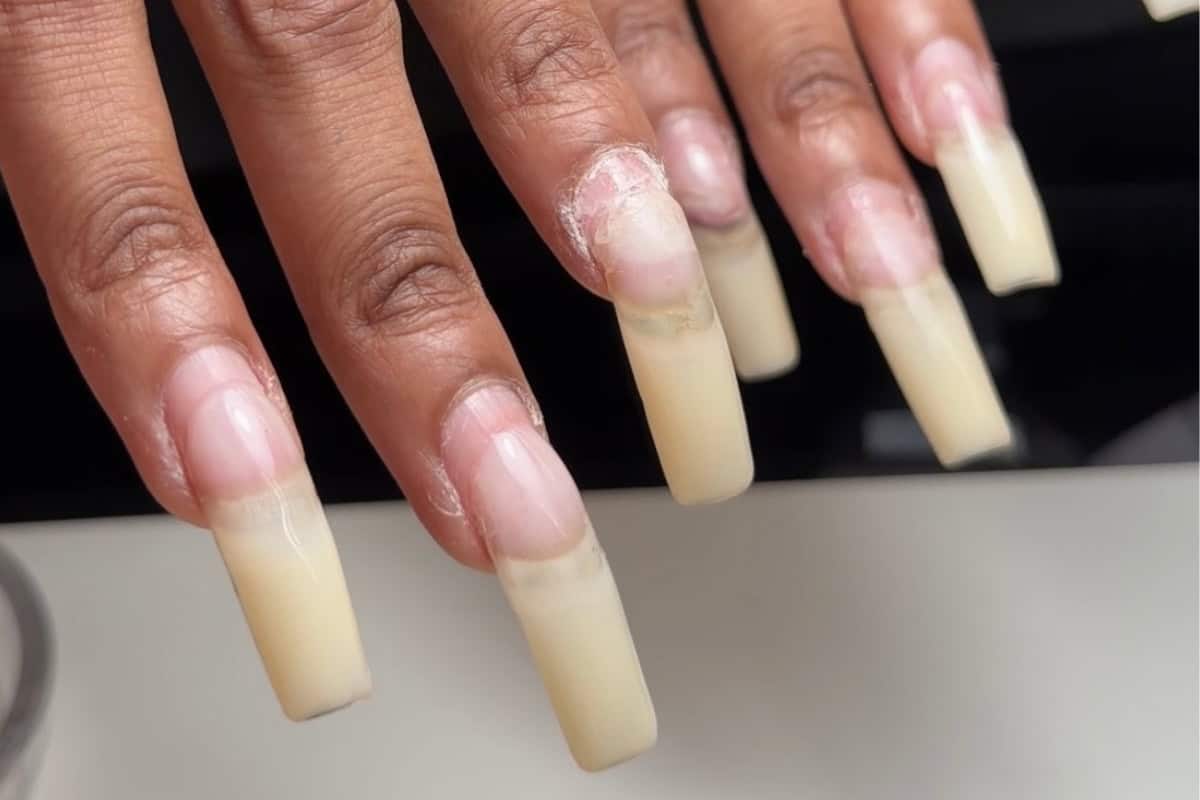
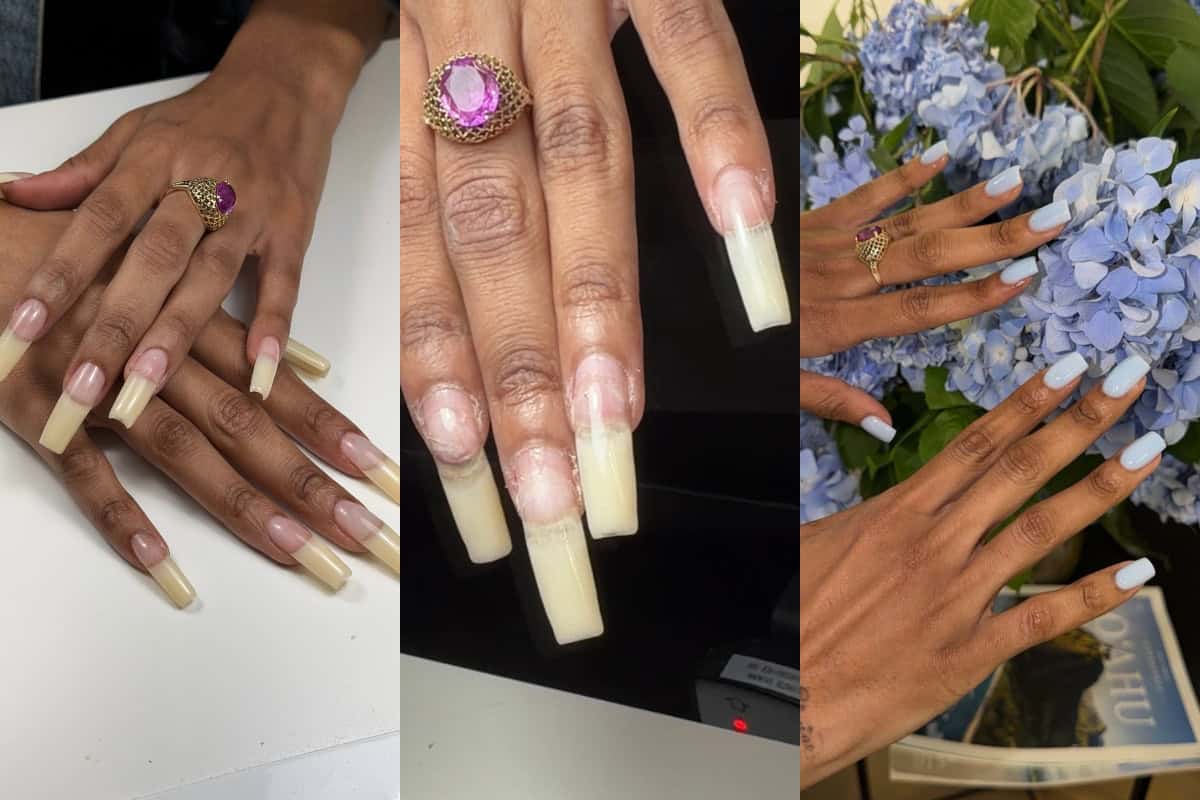
Three to four weeks after a manicure, the centre of gravity of a nail enhancement shifts. The structure that the technician built during the session no longer matches the shape of the nail plate. By the fifth or sixth week, the apex – the point of highest stress on the nail, becomes compromised. The manicure may still look good, but the volume, shape and distribution of stress on the nail plate are compromised.
At week seven, pressure on the free edge increases, and micro-cracks and delaminations appear under the enhancement, almost invisible from the outside. When removing the coating, a nail technician will notice them and face a choice: to mask them or treat them. My recommendation is to treat them.
Chemistry in the lamp
A brief chemistry lesson can enhance a nail appointment: while the hand is in the curing lamp, the nail technician can explain what’s happening. Gel products undergo a chemical reaction in the lamp, as UV or LED light triggers polymerisation. This is when short gel molecules link together into long chains, and the material transitions from a liquid, viscous and stringy state to a strong and solid state.

Are you enjoying this content?
Join our community to receive more like this
However, over time, this coating gradually loses its elasticity and becomes brittle, even if the client takes good care of it and doesn’t use their fingers to open cans, tend to their vegetable garden and so on. The brittle material can chip off in small fragments, taking the top layer of the nail plate with it.
Why you shouldn’t interrupt the curing process
Let’s go back to the lamp for a moment. The quality of polymerisation depends on how the nail technician performs the cure, and how the client approaches this process. If their phone rings and they remove their hand from the lamp, the process is interrupted.
An interrupted or shortened curing cycle results in unevenly cured gel: the material hardens at the edges of the nail plate, while a viscous pool of gel remains in the centre. This heightens the risk of exposure and allergy for the client and nail professional, and the coating will deform faster than one that’s been cured evenly.
International differences
Views and habits vary widely when it comes to manicures. In Ukrainian salons, the responsibility of maintaining a manicure typically lies with the client, driven by law. Once you’ve ‘taken’ a manicure home, you bear full responsibility for it – any damage will be repaired, but for an additional fee.
In the US, I’ve found that many clients expect their manicures to remain pristine for many weeks, minus the natural growth of the nail. This is partly due to materials used: L&P acrylic is popular in American salons, as it is more resistant to external factors than gel. However, the product can put more strain on the nail plate. Nail technicians are obligated to explain this trade-off between durability and the health of the natural nail to clients, as soon as a nail system is chosen.
The health trend
Throughout 2026, natural nails have became one of the most talked-about trends in the nail industry. Minimal decoration, strengthening treatments and glossy finishes are all popular. ‘Bare’ nails won’t leave manicurists out of work; they open up conversations between nail technicians and clients about natural nail health. This is important, as health should never be sacrificed for beauty.